Engaging All Learners

Engaging All Learners
Studio Day April 2019
Showing posts with label Common Core/CCRS. Show all posts

Wednesday, November 18, 2015

Teachers Report Better Student Performance With Scholarship Program Incentives


Did you know students can earn scholarship money beginning their ninth grade year for attending school regularly,participating in community service activities,making good grades,playing a sport, and more?

Raise.Me, has a program that allows students the opportunity to earn and bank money for activities they complete in high school. These are considered "Micro Scholarships". Students can register for an account at any point in their high school career and activities can be added retroactively.

There are approximately 86 schools currently offering these micro scholarships. Alabama schools participating in the program are UAB, Montevallo, and Spring Hill College, Auburn University, and more.

Students must meet the GPA requirements of each college in order to be awarded the money.  GPA is calculated by taking the average of your unweighted core course grades (English, Math, Science, and Social Studies, and Foreign Language).

If your students think micro scholarships aren't worth their time, show them this article about Abby Saxastar who only discovered Raise.Me a few months before she graduated and was able to earn over $80,000 by retroactively logging her grades and service activities.  She now has a full ride to Stetson University in Florida.

Encourage your students to gain parent permission and read the privacy policies before creating an account. There may be personal information required so we strongly recommend this be completed at home with a parent.
Learn more about Raise.Me and create an account HERE.

Tuesday, November 17, 2015

Science Teachers Learn at CCRS Quarterly Meeting

Administrators and science teachers from all schools attended the second of four quarterly CCRS Science meetings at the Lincoln Center in Birmingham.  Teachers are unpacking the new Alabama Science Standards.  They turn their new learning around for science teachers in their schools.  


Wednesday, October 7, 2015

Enhancing Student Learning through Mathematical Discourse


What is mathematical discourse and why is it important?

Mathematical discourse is spoken and written communication about mathematics in the classroom, specifically around the ways in which teachers and students strategically work together to represent, think and talk about math. There are several important benefits of mathematical discourse:
•Classroom discussion ultimately reveals a student’s understanding of the concepts presented by asking them to show both how a problem was solved and why a particular method was chosen.
•Students learn to engage in mathematical reasoning and debate, developing the mathematical language skills needed for productive discourse and learning.
•Students learn to constructively critique their own and others’ ideas while seeking out efficient mathematical solutions, a skill transferable to other areas of their lives.

What strategies can teachers use to facilitate “productive talk” and encourage full student participation in their classrooms?

Teachers need to be intentional about how they begin mathematical discourse, recognizing that students are not immediately prepared for this type of conversation. This means establishing classroom norms right away and continually modeling and reinforcing specific behaviors, such as appropriate ways to engage in a disagreement with a peer. Instead of attacking a peer’s answer to an issue, students should be taught to focus on attacking the issue itself.

Providing the correct language to use is especially important at certain grade levels. Middle school students in particular benefit from this guidance. By consistently using certain responses themselves (and calling attention to the use of these responses), teachers can facilitate the desired classroom productivity and participation levels. This can be done through strategic questions designed to support instructional processes as well as direct/redirect student focus, such as:
•“Would you please repeat that? I heard you say x, but I think you meant y.”
•“Do you agree with Julie’s reasoning?”
•“Did anyone do the problem a different way?”
•“Can someone explain Caitlin’s approach in another way?”
•“What assumptions did you make when you solved this problem?”

To read more of Gladis Kersaint's article, click here.

Tuesday, September 22, 2015

Science Training

The Trussville City Schools Science Team met today with area school districts for the first of four meetings during the 15-16 school year to unpack the newly adopted 2015 Alabama State Science Standards.  The team includes administrators and teachers representing every grade level and science content areas.   The team will turn the training around to all science teachers during the year.

The goal of Alabama's K-12 science standards is the achievement of scientific and engineering literacy by all students.  The conceptual framework includes the three basic dimensions for establishing scientific and engineering literacy - scientific and engineering practices, crosscutting concepts, and disciplinary core ideas.  Scientific and engineering practices are a set of skills and tools used by students to investigate, construct models, design and build systems, and develop theories about the world in which they live.  Crosscutting concepts are unifying themes that link scientific and engineering ideas across all domains of science. Disciplinary core ideas in the four domains of Physical Sciences; Life Sciences; Earth and Space Sciences; and Engineering Technology, and Application of Science are broad concepts that provide students with foundational knowledge.  

Thursday, February 19, 2015

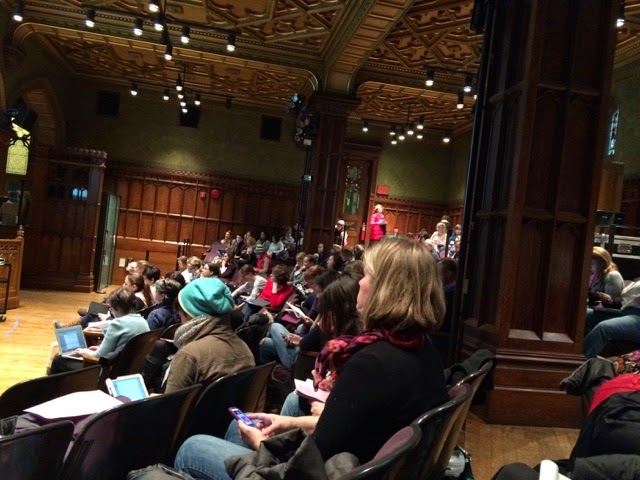
PI Teachers Study at Teachers College at Columbia University

Principal Autumm Jeter, Reading Coach Kelly McGough, and teachers, Amy Kuhn, Marianna Waits, Allie Aldrich, Jana Feild, Dee Dee Brasher, and Carrie Almon, have studied at the Teachers College at Columbia University in New York for the last four days.  They have focused on developing the curriculum and methods necessary to help students reach the rigorous standards for content area literacy embedded in the Common Core.

Discussions and demonstrations included how to ramp up the level of rigor and engagement in the content areas. The participants learned about small group work, collaborative inquiry and multi-media centers, which allow students to research in the company of others.

The teachers worked to develop a repertoire of skills for helping students think and read nonfiction texts analytically, including reading for central ideas, synthesizing, and comparing and contrasting. They studied methods for involving whole classes in close reading of grade-level complex texts and nonfiction read-alouds.

Participants also learned concrete methods to support and hone students’ note-taking skills, including observing, sketching, sorting and categorizing notes. The institute focused on nonfiction content and reading with an emphasis in grades 3-8 on quick content area essays. The teachers learned about ways to help students write fluently across the curriculum, using writing as a tool for analytical thinking.

Additionally, the group learned about using performance assessments to track students’ progress in some of the higher-level comprehension skills inherent in the CCRS. As a culminating activity, the teachers developed action plans aimed at revising curriculum in social studies and language arts.


Kelly McGough and Lucy Calkins

Allie Aldrich and Lucy Calkins


Thursday, February 12, 2015

Increasing Rigor and the Reading of Historical Fiction

Fourth graders at Paine Intermediate are reading Forty Acres and Maybe a Mule for reading and social studies.  The book is the Winner of the 1999 Scott O'Dell Award and A Notable Children's Book in the Field of Social Studies.


The main characters are ex-slaves, Pascal and his older brother Gideon.  They have been promised forty acres and maybe a mule. With the family of friends they have built along the way, they claim a place of their own. Green Gloryland is the most wonderful place on earth, their own family farm with a healthy cotton crop and plenty to eat. But the notorious night riders have plans to take it away, threatening to tear the beautiful freedom that the two boys are enjoying for the first time in their young lives. Coming alive in plain, vibrant language is this story of the Reconstruction, after the Civil War.

Understanding this challenging, rigorous content requires fourth grade readers to use new skills  for determining theme, summarizing, explaining differences in casts of characters, setting, descriptions, and dialogue, referring to details and drawing inferences from the text, and explaining events, ideas, and concepts in a historical text.  Take a look at the charts teachers use to help guide students through the reading of historical fiction.


State Board Work Session Update

The State Board of Education met in a work session today, February 12,  in Montgomery with all Board members in attendance with the exception of Betty Peters and Jeff Newman.  Items on the agenda included the following:

Mathematics Standards Review – Mrs. Sherrill Parris, Dr. Julie Hannah, Mr. Steve Ricks, and Ms. Andrea Von Herrman, Jefferson County Schools, Mathematics Course of Study Member, shared an overview of the review process.

After careful review there was unanimous agreement by the Mathematics committee that no actions were needed on any of the comments from the public review.  No action by this committee affirms the quality of the current COS for Mathematics.  Additionally, the committee believes the COS is well written and standards are appropriately placed to ensure students become college and career ready. We would recommend that many of the concerns expressed in the comments be addressed by teacher and community education.

English Language Arts Standards Review – Mrs. Sherrill Parris, Dr. Julie Hannah, Ms. Judy Stone, and Ms. Lindsey Kissic, Sylacauga City Schools, English Language Arts Course of Study Member, shared an overview of the review process.

The committee considered and discussed each comment individually and agreed on whether to recommend action or no action.  There was unanimous agreement that no action should be taken on the majority of the comments from the public review.  There were 2 recommendations from 128 disagreeing comments.  The comments fell into three main categories of concern related to the standards.
o Grade-level placements of the standards: There were many suggestions for moving standards to a higher grade level. The committee felt this is an indication of a lack of understanding about the increased rigor which leads to college and career readiness and about how the standards build from one grade level to the next. 
o Local implementation of the standards: There were several comments about instruction (how the standards are being taught, materials, etc.) and about assessments. The standards state the expectations for what students should know and be able to do by the end of each grade level.  Both instruction and assessment are local decisions.
o Lack of understanding regarding the meaning of the standards: Some comments did not address the content of the standard. Some questioned the value of certain literacy standards which the committee felt are critical skills (e.g., naming characters, setting, main idea, supporting details, retelling the story, naming the author and illustrator)
Two minor edits were recommended for clarity.  
o The first recommendation is for Kindergarten Language Standard #37.  Add “begin to” to the standard. – Begin to – demonstrate command of the conventions of standard English grammar and usage when writing or speaking.
o The second recommendation is to add a clarifying example to First Grade Standard #17 for Reading Informational Text. - (e.g., eating a balanced meal, obeying safety rules, engaging in recycling projects).
Recommendations other than edits for the COS:
o Consider the implications for on-going professional development and support (e.g., parent meetings, CCRS Quarterly Meetings, local differentiated PD and support). Clarify that the standards call for increased rigor at all grade levels with knowledge and skills now appearing in earlier grades than in the past. Emphasize how the standards build from one grade level to the next. Clarify that standards are expectations for what students should know and be able to do. They do not specify curriculum nor assessments.  These are local decisions.

Friday, January 2, 2015

What Problems is the Common Core Trying to Solve? Everything You Need to Know About Common Core

Educators need to prepare how they will respond when the community, parents, and students ask, "What problem is Common Core trying to solve?"  Libby Nelson has condensed the most important questions about Common Core into easy-to-read explanations in her "Everything You Need to Know About Common Core."
You can read all of the cards at:

Card #3
What problems is the Common Core trying to solve?

Two big, complex problems. First, American students are middle-of-the-road at best on academic skills when compared to other countries on international tests. Policymakers and business leaders hope that tougher standards will help the US catch up globally.

Second, under the old system, it was hard to compare students in different states. Until now, each state set its own standards for what students should understand at each grade level, and each state had a different definition for what it meant to be "proficient" in math and reading.

The US Education Department's statisticians found a lot of variation when they mapped state standards onto scores on the National Assessment of Educational Progress. That test is called the "Nation's Report Card" — a standardized test students take nationally every few years. They also found that even students who met state goals might not actually be doing all that well, since the national exam set the bar higher than states did. In the federal government's eyes, all states had standards that were too low, and there was too much variation on how low they were.


Most education systems don't work that way, and it makes it difficult for states to collaborate to improve education nationally. The Common Core is supposed to solve this by holding students in the majority of states to the same, higher standards.

Who Created the Common Core? Everything You Need to Know About Common Core

Educators need to prepare how they will respond when the community, parents, and students ask, "What exactly is Common Core?"  Libby Nelson has condensed the most important questions about Common Core into easy-to-read explanations in her "Everything You Need to Know About Common Core."
You can read all of the cards at:

Card #2
Who created the Common Core?

Two nonprofit groups led the effort to write the new standards, and others contributed. One, the Council of Chief State School Officers, represents the top K-12 education officials from all US states and territories. The other is the National Governors Association. Achieve, a nonprofit education reform group, also helped. The groups brought in the two major teachers' unions, the National Education Association and the American Federation of Teachers, as well as other national organizations that represent teachers of math and English.


Writing the standards took about 18 months, beginning with a report from the three main groups involved in late 2008. A draft was released for public comment, and a committee of experts also provided comments. The standards were finalized in June 2010 with a report explaining the groups' reasoning.

What is Common Core? Everything You Need to Know About Common Core

Educators need to prepare how they will respond when the community, parents, and students ask, "What exactly is Common Core?"  Libby Nelson has condensed the most important questions about Common Core into easy-to-read explanations in her "Everything You Need to Know About Common Core."
You can read all of the cards at:

Card #1
What is the Common Core?
The Common Core State Standards are a new set of academic standards adopted by 43 states. The standards are meant to prepare students for college and careers and to make the US more competitive academically. They're benchmarks for what students should know and be able to do in math and language arts from kindergarten through senior year of high school.

The Common Core includes a lot of those benchmarks at each grade level, but there are a few unifying themes. Language arts standards focus on basing arguments on evidence. Students will write fewer personal narratives and more opinions. They'll also be asked to read more nonfiction. In math, the standards focus on fewer concepts, but in more depth.

States used to set their own academic standards, and they could vary widely in rigor. The goal of common standards is to make sure all public school students are prepared for college and for jobs when they graduate from high school, regardless of where they live. Writing assignments are more about evidence-based arguments and less on personal narratives like, "What I did on my summer vacation." Math standards focus on fewer topics in more depth that are meant to progress logically from grade to grade.

Two state groups, the National Governors Association and Council of Chief State School Officers, created the Common Core standards in 2009 and 2010. But they're in the news now because states are beginning to use the Common Core as the basis for state tests. As the standards move from theory to reality, they're becoming better-known and, often, more controversial among parents and legislators. The Common Core standards are more challenging than what most states used to use, and kids aren't doing as well on these tests.


Tuesday, December 2, 2014

Reading, Thinking, Listening, Talking, and Writing

Students in Mrs. Higginbotham's fourth grade class were 100% engaged in challenging and interesting non-fiction text today.  Students first silently read articles on Minecraft and Lego Bricks. Their purpose for reading was to compare and contrast the histories of these two toys. Students then partnered up and took turns reading both articles aloud a second time. They then were asked to locate text evidence to answer questions that the partners asked each other. Together, the partners completed a compare and contrast chart. To culminate, the students wrote a response in their journals, citing ways that the two toys are similar and different. They were expected to write two well-organized paragraphs, using evidence from each article.

Mrs. Higginbotham is a master at creating lessons that provide opportunities for reading, thinking, discussing, and writing. The lesson provided for independent work, as well as collaboration.  


Students reread the articles aloud after reading them independently.

Students use oral language to ask and answer questions about the text.

Mrs. Higginbotham encourages students as they read challenging non-fiction.

Tuesday, November 18, 2014

Changing the Way Fractions Are Taught

For many elementary teachers, fractions have traditionally sprung to mind lessons involving pizzas, pies, and chocolate bars, among other varieties of "wholes" that can be shared. But in what many experts are calling one of the biggest shifts associated with the Common Core State Standards for mathematics, more teachers are now being asked to emphasize fractions as points on a number line, rather than just parts of a whole, to underscore their relationships to integers.  Read more about this big math shift by clicking Fractions!  and accessing the Education Week article.


Monday, November 3, 2014

Common Core Math a Mystery to Some Parents


Most U.S. public school students are learning math very differently than their parents did, due to Common Core State Standards, national K-12 math and reading benchmarks that have been adopted by 43 states and the District of Columbia.

The changes have confused many parents — particularly at the elementary level — leaving them flustered by a basic parental duty: Helping with homework.

To read more about how schools are  helping parents understand Common Core Math Standards, click on the link below:

http://www.washingtonpost.com/local/education/common-core-math-can-be-a-mystery-and-parents-are-going-to-school-to-understand-it/2014/11/01/af57efa0-604f-11e4-9f3a-7e28799e0549_story.html 

101 Books for College Bound Kids


From GreatSchools Staff

Take a respite from the rush and chatter of modern life and spend time with a masterpiece. Even better: entice your teen to join you. Choose a book together and take turns reading it aloud, or track down the audio version and listen to it during your next road trip. This book list, compiled by the CollegeBoard, includes classics your student should read before (or during) college. But don't use the "s" word! Instead, let your child know that these aren't just classics, they are tales of romance, war, adventure, and courage, and that — while they won't love every story — a few are sure to become beloved lifelong companions. As author Italo Calvino wrote: “A classic is a book that has never finished saying what it has to say.”

To see full lists of suggested books, click here.

Friday, October 31, 2014

Study Finds Teachers a Key Source of Common Core Curricula


A report released Thursday by the Center on Education Policy provides one of the first early glimpses of how districts are solving one of the most difficult problems of putting the Common Core State Standards into practice. Overwhelmingly, they're creating their curricula locally.

More than two-thirds of districts reported that their teachers are designing common-core curricula, and half said that the district is creating it.

Elena Balint, the manager of the American Federation of Teachers' ShareMyLesson, an online storehouse of instructional resources created and uploaded by teachers, said she wasn't surprised to see teachers heavily involved in creating common-core curriculum in their districts. 

"Teachers are really engaged. They do this of their own volition, because they believe in sharing their expertise and because they want to be better teachers," she said. "Teachers trust teachers. It's their area of expertise to create materials and lesson plans that work for their classrooms."

To read the full article, click below.

http://blogs.edweek.org/edweek/curriculum/2014/10/teachers_a_key_source_of_common_core_curricula.html 

Monday, October 20, 2014

NEWSELA

Paine Intermediate Reading Coach Kelly McGough recommends the resource NEWSELA. This is a great resource for complex text.  Teachers can adjust the reading level, and it works great with Chromebooks.  Best of all,  it is free!

https://newsela.com/ 


Saturday, October 11, 2014

District College and Career Ready Team Meets

Our Trussville City Schools District CCRS Team met on Friday to discuss the processes each school is using to implement the Alabama College and Career Ready Standards.  The team looked at data from each school to begin the process of determining strengths and needs.  The goal of this team is to create a focused district professional development plan that provides administrators and teachers the PD, resources, and information needed to implement the new standards and assessments.  Team members include:
Beth Bruno
Betsy Schmitt
Autumm Jeter
Lisa Berry
Jennifer Cardwell
Melanie Glover
Kristi Stacks
Kelly McGough
Edra Perry
Amanda Roberts
Mindy Dennis
Donna Brumlow
Lisa Lothspeich
Charlotte Booker
Tommy Abney
Joy Young
April Chamberlain
DeAngelia Dailey
Ryan Minisman
Kim Lewis
Diane Byars
Christi Williamson


Wednesday, October 1, 2014

Learning about Academic Vocabulary

Outstanding professional learning was led today by Paine Intermediate reading coach, Kelly McGough, and Paine Intermediate math coach, Lisa Lothspeich.  Their instruction was based on Robert Marzano's research in his book, Building Academic Vocabulary.  On Monday, the school will begin implementing a school wide focus on academic vocabulary.  A new word will be highlighted and taught each "A" Day.  All teachers, including administrators and specialists, will intentionally teach and use the words throughout the 8-day rotation.  These words will be displayed in the classrooms, hallways, and lunchroom.  The focus will be on Tier II words that cross all contents and are often used in academic dialogue and text. These are the words that are not necessarily used in students' conversations, but are often seen in directions or test questions.Research indicates the intentional teaching of academic vocabulary will result in higher student achievement.

To read more about teaching academic vocabulary, click here.  


Sunday, September 28, 2014

A Call for Exemplars

Please send me examples of exemplary lessons that you are willing to share with colleagues through our Curriculum and Instruction Blog.

Implementing CCRS

Paine Intermediate fourth grade literacy and social studies teachers, Jana Feild, Kimberly Felts, and Tamra Higginbotham,  designed a rigorous Alabama Prehistoric Native American  Unit that adheres to the Fourth Grade Alabama History Standards, and moreover, the fourth grade College and Career Ready Standards.  

The teachers collaborated to determine how best to meet the following fourth grade standards:
Common Core Standards
Weekly Goals

Focus Skills
RI 4.1- Refer to details and examples in the text
RI 4.3- Explain events, procedures, ideas, or concepts in a historical text, including what happened and why
RI 4.5- Describe the overall structure (chronology, problem/solution)
RI 4.7- Interpret information presented visually, orally (charts, graphs, timelines, interactive element)
â I can determine the main idea and detail of a text
â  I can determine the order of historical events
â I can understand how to interpret non-fiction text features.
â  Main Idea and Detail
â  Sequencing
â utilizing non-fiction text features
History Standard 2Describe cultures, governments, and economies of prehistoric and historic Native Americans in Alabama.
• Identifying locations of prehistoric and historic Native Americans in Alabama
• Describing types of prehistoric life in Alabama Examples: plants, animals, people
• Identifying roles of archaeologists and paleontologists.


The Integrated Literacy collaboration and design team (CAD) planned a mini- archaeological dig and archaeological presentation to culminate the unit of study.
Fourth grade students participated in a prehistoric mini-archaeological dig this past Friday. Students learned interesting facts from archaeologist, Joel Watkins. Mr.  Watkins, from the Office of Archaeological Research at The University of Alabama,  talked with the fourth grade students about the Trussville Stadium Archaeological Dig Site and the pre-historical artifacts that were unearthed.