At Paine Primary, students are getting the opportunity to explore and work with robots. Librarian Rachel Brockman and Technology Integration Specialist Charlene Hallman sponsor the school's robotics club.
At their initial meeting, excited and motivated students explored new BeeBots. They had to figure out what each button would do, and come up with a bit of information about BeeBot’s operation and behavior that they wanted to share with the group.
The goal of this blog is to inform and update educators on relevant and important issues regarding teaching and learning.
Engaging All Learners
Studio Day April 2019
Wednesday, February 25, 2015
Robotics at Paine Primary
Congratulations!
Congratulations to 4th grade teacher, Jana Walls, and Math Coach, Lisa Lothspeich. Together, they wrote a proposal to present "Developing Multiplication Fact Fluency in the 21st Century" at the regional conference for the National Council of Teachers of Mathematics (NCTM). Their proposal was accepted and these two faculty members will represent Trussville City Schools in Nashville this November.
Trussville Police Department Active Shooter Awareness for Teachers
TRUSSVILLE POLICE DEPARTMENT’S SCHOOL RESOURCE OFFICER UNIT
PRESENTS:
ACTIVE SHOOTER AWARENESS FOR TEACHERS
JUNE 10TH
8:00 AM – 12:00 PM OR 1:00 PM - 5:00 PM
JUNE 17TH
8:00 AM – 12:00 PM OR 1:00 PM - 5:00 PM
HEWITT-TRUSSVILLE
MIDDLE SCHOOL
5275
TRUSSVILLE CLAY ROAD
TRUSSVILLE,
ALABAMA 35173
Course Objective: To
experience a simulation of law enforcement officials as they seek to rid an
active shooter from a school environment.
The short
history of school shootings in the United States has caused major changes in
the school environment. Learn what you
as a teacher can do to protect yourself and your students from a potentially
dangerous intruder. Resource Officers
from Trussville City Schools will lead you through our system’s crisis plan and
an actual Intruder Drill. This
simulation will allow you to experience basic movement’s police officers take
while seeking an active shooter in a school building.
Please email
Sgt. Posey at todd.posey@trussvillecityschools.com with the date and time that is most
convenient for you. Each class session will be limited to 25 students. Be sure to register early and reserve your
slot for this course. Casual clothing
(jeans) with a long sleeve shirt is recommended.
Preparing for Accreditation Process
Trussville City Schools will host an AdvancED External Review in November 2015. AdvancED is an organization that conducts rigorous, on-site external reviews of PreK-12 schools and school systems to ensure that all learners realize their full potential. Their goal is to help schools improve.
The TCS Accreditation Team consists of
Dr. Neill
Phyllis Faust
Jim Kirkland
Beth Bruno
Mandi Logan
April Chamberlain
School Administrators
Representatives from each school
The team met Tuesday to begin the self-assessment process. Staff, students, and parents will be surveyed this spring. An AdvancED External Review Team will visit our schools in November. Look for more information regarding the process and the November external review on the C&I blog.
Thursday, February 19, 2015
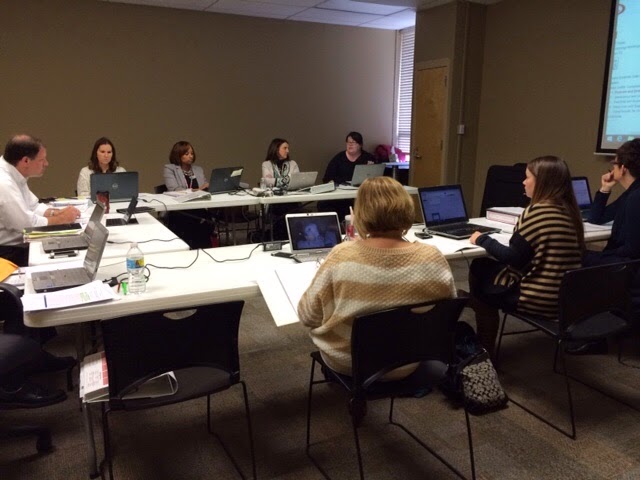
TCS Diversity Committee Meets
The Trussville City Schools Diversity Committee met today during a lunch meeting for the purpose of discussing diversity factors in the workplace, to learn more about the infrastructure of diversity, and to begin the process of crafting a diversity statement for the district.
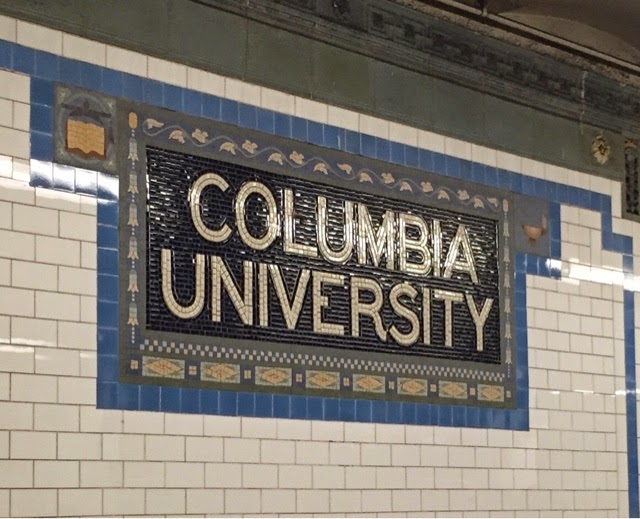
PI Teachers Study at Teachers College at Columbia University
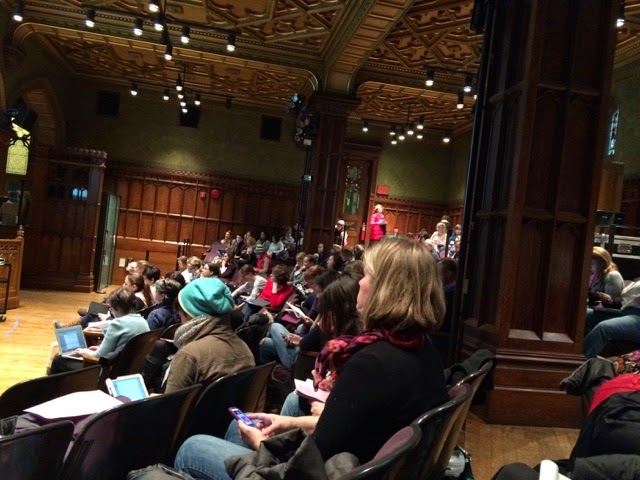
Principal Autumm Jeter, Reading Coach Kelly McGough, and teachers, Amy Kuhn, Marianna Waits, Allie Aldrich, Jana Feild, Dee Dee Brasher, and Carrie Almon, have studied at the Teachers College at Columbia University in New York for the last four days. They have focused on developing the curriculum and methods necessary to help students reach the rigorous standards for content area literacy embedded in the Common Core.
Discussions and demonstrations included how to ramp up the level of rigor and engagement in the content areas. The participants learned about small group work, collaborative inquiry and multi-media centers, which allow students to research in the company of others.
The teachers worked to develop a repertoire of skills for helping students think and read nonfiction texts analytically, including reading for central ideas, synthesizing, and comparing and contrasting. They studied methods for involving whole classes in close reading of grade-level complex texts and nonfiction read-alouds.
Participants also learned concrete methods to support and hone students’ note-taking skills, including observing, sketching, sorting and categorizing notes. The institute focused on nonfiction content and reading with an emphasis in grades 3-8 on quick content area essays. The teachers learned about ways to help students write fluently across the curriculum, using writing as a tool for analytical thinking.
Additionally, the group learned about using performance assessments to track students’ progress in some of the higher-level comprehension skills inherent in the CCRS. As a culminating activity, the teachers developed action plans aimed at revising curriculum in social studies and language arts.
Discussions and demonstrations included how to ramp up the level of rigor and engagement in the content areas. The participants learned about small group work, collaborative inquiry and multi-media centers, which allow students to research in the company of others.
The teachers worked to develop a repertoire of skills for helping students think and read nonfiction texts analytically, including reading for central ideas, synthesizing, and comparing and contrasting. They studied methods for involving whole classes in close reading of grade-level complex texts and nonfiction read-alouds.
Participants also learned concrete methods to support and hone students’ note-taking skills, including observing, sketching, sorting and categorizing notes. The institute focused on nonfiction content and reading with an emphasis in grades 3-8 on quick content area essays. The teachers learned about ways to help students write fluently across the curriculum, using writing as a tool for analytical thinking.
Additionally, the group learned about using performance assessments to track students’ progress in some of the higher-level comprehension skills inherent in the CCRS. As a culminating activity, the teachers developed action plans aimed at revising curriculum in social studies and language arts.
Kelly McGough and Lucy Calkins
Allie Aldrich and Lucy Calkins
Thursday, February 12, 2015
Increasing Rigor and the Reading of Historical Fiction
Fourth graders at Paine Intermediate are reading Forty Acres and Maybe a Mule for reading and social studies. The book is the Winner of the 1999 Scott O'Dell Award and A Notable Children's Book in the Field of Social Studies.
The main characters are ex-slaves, Pascal and his older brother Gideon. They have been promised forty acres and maybe a mule. With the family of friends they have built along the way, they claim a place of their own. Green Gloryland is the most wonderful place on earth, their own family farm with a healthy cotton crop and plenty to eat. But the notorious night riders have plans to take it away, threatening to tear the beautiful freedom that the two boys are enjoying for the first time in their young lives. Coming alive in plain, vibrant language is this story of the Reconstruction, after the Civil War.
Understanding this challenging, rigorous content requires fourth grade readers to use new skills for determining theme, summarizing, explaining differences in casts of characters, setting, descriptions, and dialogue, referring to details and drawing inferences from the text, and explaining events, ideas, and concepts in a historical text. Take a look at the charts teachers use to help guide students through the reading of historical fiction.
The main characters are ex-slaves, Pascal and his older brother Gideon. They have been promised forty acres and maybe a mule. With the family of friends they have built along the way, they claim a place of their own. Green Gloryland is the most wonderful place on earth, their own family farm with a healthy cotton crop and plenty to eat. But the notorious night riders have plans to take it away, threatening to tear the beautiful freedom that the two boys are enjoying for the first time in their young lives. Coming alive in plain, vibrant language is this story of the Reconstruction, after the Civil War.
Understanding this challenging, rigorous content requires fourth grade readers to use new skills for determining theme, summarizing, explaining differences in casts of characters, setting, descriptions, and dialogue, referring to details and drawing inferences from the text, and explaining events, ideas, and concepts in a historical text. Take a look at the charts teachers use to help guide students through the reading of historical fiction.
Labels:
Common Core/CCRS,
Reading,
Teaching and Learning
Subscribe to:
Posts (Atom)