Engaging All Learners

Engaging All Learners
Studio Day April 2019
Showing posts with label Positive Behavior Supports. Show all posts

Wednesday, February 22, 2017

A Case for Kindness

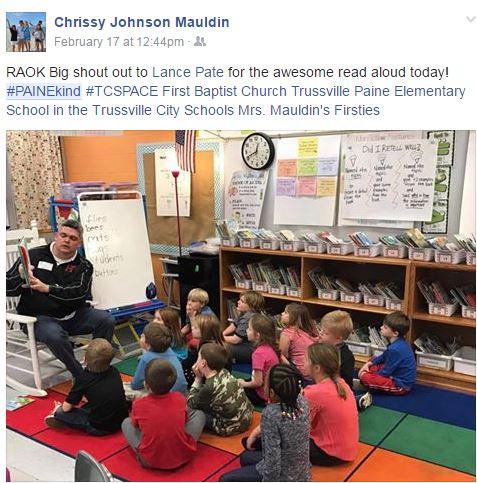
We have spent the entire month of February collecting examples of Random Acts of Kindness.  The examples in this post are just a handful of over 250 reported acts thus far. Even though this is a friendly school competition, we all win by teaching, modeling, and showcasing kindness.
Why stop when February ends?  We all hope our students experience kindness at home, but what if that is not true? How can we continue to recognize and model kindness everyday? According to Aristotle, "Educating the mind without educating the heart is no education at all." Here are some easy ideas that allow you to make a case for kindness everyday. You can use them as is or adapt them to fit your style. 

1) One Good Thing: This takes less than five minutes, but sets a positive tone for the day or class period.  Tell students to turn to their neighbor and finish the sentence: "One good thing in my life is..." or "Something good that happened is..."  You could randomly ask for a couple of volunteers to share daily with the class. The teacher might model one each morning, then ask for volunteers.  The possibilities are vast for this one.  This a great opportunity for students to be celebrated and affirmed.

2) Writing Kindness Activity: This activity is a good way to get some writing fluency in while catering to those who might not share this information otherwise. Give out the following sentence starters (or put them on the board, draw out of a hat, have them make up their own, etc..):

  • One idea I've gotten from you is...
  • I really like your personality because...
  • I know I can count on you when...
  • I really appreciate when you...
  • Some adjectives that describe you are...
  • I am impressed by the way you...
  • I look forward to seeing you because...


Have students put their name at the top of this paper BEFORE filling it out.  Take them up then randomly pass them out and ask the students to answer three of these prompts about the name at the top of the paper.  After a few minutes, pass them around again.  Do several rounds and then return it back to the name at the top of the paper. Instant smiles. You could do this one time at the beginning of the year and read one comment per day.


3) Shout Out: Start modeling this on day one and see how long it takes before your students start
doing it.  "I really like how...", "I noticed that...", or "I'd like to give a shout-out to..." You can fit a few shout-outs in as the bell rings, as students are coming in, or before you start class.

4) Appreciation Box: This is a great activity for students who do not like to share with the whole group.  Create a box and put it somewhere in the room with sticky notes or small strips of paper. The teacher and students can leave appreciations for classmates, encouragements, and/or shout-outs.Then, take one out each day and read it aloud before class starts.  One teacher who did this said, "We became a family."


5) Temperature Check: Ask the simple question, "How are you feeling today?"  This simple emotional check-in is a great reminder that we all share the same feelings and emotions and they go up and down depending on circumstances. This also gives the teacher insight to students who may be having a tough time, and who may need you to follow up with them privately after class.  For young students, this is also a great way to build a larger vocabulary of feelings for better communication.


6) Community Circle: This activity would be reserved for once or twice a year.  Maybe there has been a traumatic event, the students are not getting along, or other various reasons that impact the classroom. Move desks into a circle or sit on the floor in a circle.  One person only may speak at a time.  The teacher facilitates by posing a question or topic.  You can also have an object that students hold and can only speak when holding this object. This is a great activity to model sharing, listening, respecting others, and collaboration.

For more Kindness In The Classroom Activities Click HERE


Monday, December 12, 2016

Mini-Course Day at HTMS

HTMS will host their 2nd Annual Mini-Course Day on Tuesday, December 20, 2016. Students will be released at noon on that day, and mini-courses are a great way to provide a unique learning opportunity for the shortened school day. Students sign up for courses of their choice through a Google Doc that provides course descriptions for mini-courses.

Just a few of the great mini-courses include:

Vinyl Creations/ Monogramming: Mandy Mitchell will be here with her Cricut machine and heat press to help students create one of a kind tumblers and shirts or other items. Be ready to learn about how to design and personalize different items. Each student will receive one plastic tumbler to design. If you would like to make a t-shirt, be sure to bring a blank shirt from home (doesn’t have to be brand new!). Limited to 20 students.

Hip Hop Dance: No dance skills required! Come learn an energetic and fun hip hop routine from Sydnii Todd of NS Dance here in Birmingham. Wear some comfy clothes and be ready to learn! Limited to 40 students.

HTHS Colorguard/ Highstepper Prep: Are you interested in trying out for the Colorguard and/or Highstepper at the high school? This class will teach basic skills, as well as a short colorguard routine. Girls should wear comfy clothing and shoes. Flags will be provided. Limited to 25 7th and 8th grade students.

Baseball: Come learn with the pros! Dan DeMent is a hitting coach with the Tampa Bay Rays (2016 season was spent with the Double A Montgomery Biscuits) and Drew French is a pitching coach with the Houston Astros (2016 season was spent with the Single A Tri-City Valley Cats) and they will be here to talk about what makes a successful player as well as work on hitting, fielding, and pitching skills. This session will take place outside so dress appropriately and be sure to bring any baseball gear you already have. Limited to 25 students.

What Guys Need to Know: Attention all boys! It's time to Man Up! Come learn some manly basics such as changing a tire, tying a tie, checking oil, etc. Please bring a tie if you have one. This session is limited to 15 participants.

Can you BREAKOUT?: Come play an exciting game of solving mysteries and racing against the clock to “break out” of the room. You’ll be timed with your team to see who can solve challenges, riddles, and problems to be the first to break out. Limited to 20 students.

Engineering: Successful engineering is all about understanding how things break or fail. Come spend the morning building, breaking, and testing your skills in competitions that will require creative thought, teamwork, and ENGINEERING! This was one of our most popular sessions last year- this year we will limit it to 24 students.

Cosmetology: Students will learn from a pro- How to apply make-up the right way. Learn tricks and tips about contouring and looking your best! For the session on hair, students will learn how to do a cool braid as well as what’s “in” this year with hair styles.  Students are invited to bring any make up they already own, as well as a comb, brush, and hair products.  Limited to 25 students.

Monday, September 26, 2016

Student Shout-Outs at HTMS

Counselor Amy McIntyre is asking teachers to encourage their students to give a "shout-out" to their fellow students on the Student Shout-Out banners in the hallways at HTMS. "Shout-outs" are student recognitions by peers for good character and good deeds.  Selected shout-outs will be recognized over the intercom.


Wednesday, April 6, 2016

Management Strategies


Click here to check out Todd Finley's complete article on Edutopia, "18 Big and Small Classroom Management Strategies."  

Big Strategies: Fundamental Principles of Classroom Management

1. Follow the first step of hypnosis.
A hypnotist's first induction technique often involves directing subjects to focus on something they're already doing. "Feel your eyes getting tired" is a good opening, because everybody's eyes feel tired all the time, but we don't notice until someone points it out.

Teachers, like hypnotists, can string along a series of requests by asking students to do something most are already doing, then waiting for 100-percent compliance, and finally issuing another directive, etc. It's better for teachers to say, "Point your eyes toward me" and wait for compliance, instead of saying, "Stop talking, turn around, turn to page 237, take out a pencil, and head your paper with 'Geology Frame.'"

2. Keep your consequences as minimal as possible.
When a rule is broken, assign the smallest consequence possible and see if that gets the job done. Don't use up big consequences too fast.

3. Appropriate curriculum is a classroom management strategy.
For some, being thrown out of the room for backtalk has a lower social cost than appearing dumb in front of peers. Assigning appropriately difficult work (which often means differentiating) eliminates that risk.

4. Rehearse transitions.
Most disruptions occur before the bell rings and between activities. "Silent 30" was my signal for all students to clear their desks and sit silently within half a minute. A class reward occurred after 30 were completed successfully. My kids loved how visitors witnessing the routine would drop their jaws in surprise.

5. Anticipate problems and be creative.
At the beginning of one year, my middle-grade students charged into class like Mel Gibson and a thousand Scottish warriors. To solve the problem, I asked my kids to line up for class outside my door with their left arm against the wall and a foot of space between them and the person in front of them.

To enter class, each child had to answer either a content-related question or a random dumb question like, "What type of weapon would you use to battle Aquaman?" The dumb questions kept the line entertained. After answering, they were directed to take a seat, quiet as moonlight, and follow instructions on the board. Students talking or violating any of the protocol were sent to the back of the line.

6. Make positive phone calls home and send letters.
I used to send a positive note home to every student's guardians, and that note included a magnet (100 cost about $9.00) to encourage its placement on the refrigerator. I also left complimentary voicemails. That way, parents and kids saw me as an ally.

Little Things: Quick Interventions That Support Classroom Management

1. Show students that it pays to behave.
At the end of tough classes, I'd daily give out two raffle tickets -- one for academic effort and one for good behavior. After writing their names on the tickets, kids dropped them in a jar. On Friday, I randomly drew two student names -- both received candy bars.

2. Never punish an entire class.
Even when you feel like the the entire class is misbehaving, there are always some kids following directions. Punishing the class as a group only incites further resistance.

3. Build content-related anticipation.
At the beginning of class, say, "Later today, I'll tell you. . ."

How to cure cholera (Clean water makes all the difference.)
What most super-geniuses have in common (They burn through acolytes.)
How the X-Wing fighters in Star Wars violate Newtonian physics (Blasters and afterburners don't make sounds in space.)
The goal is to get students interested in the teacher's agenda in lieu of misbehaving.

4. Change the tone.
To interrupt a class of aggressive complainers, I cued up Katrina and the Waves on my CD player. When the first grumbling complaint occurred, I raised my palm and played "I'm walking on sunshine, woooah / And don't it feel good!" Everybody laughed. Another kid started to whine until I pressed play again. Bigger laughs. After that, complaints rarely occurred.

5. Find things to appreciate.
Instead of starting class braced for conflict, make yourself look for things to delight in: that Serena knows everything about Detroit hip-hop or that your thermos of Intelligentsia Coffee is three quarters full.

6. Ramp up your enthusiasm.
There's no downside to being 20 percent more enthusiastic.

7. Use your words.
Students sometimes miss the obvious. Say, "This class makes me glad that I teach."

8. Don't pander.
Never cueing students to meet your emotional needs is an important adult boundary. And one of life's paradoxes is that people who never obsess over being adored are often the recipient of adoration.

9. Forgive.
When students get kicked out of Katie Riley's ninth-grade English classroom, she always tells them that everything is forgiven and that the next day will be a fresh start. When a student commits a felony, he sees Ms. Riley sitting in the courtroom gallery. That's all he needs to know.

10. Give students choices.
"Do you want to do this assignment in class or as a take-home quiz?" "Should this project be group or independent work?" Choice increases students' buy-in.

11. Publicly announce classroom management goals.
Say, "Yesterday, the noise was at an 'eight' during work time. Let's shoot for a 'five' today."

12. Establish routines.
For more chaotic classes, keep the class predictable. Also post the day's schedule.

13. State the truth when things go wrong.
If students are confused and lost, don't brush over it. And when you've sent a student out of the classroom, say, "That makes me sad and frustrated, but let's get our brains focused back on the third math problem."

Tuesday, December 8, 2015

Absences Matter


Each day, teachers collect data on students who are absent. When we send attendance reports to the state department, they merge all data from our four schools and assign a collective percentage as the attendance rate. In 2014-2015, the TCS attendance rate was 97.32%.  What does that percentage really mean? The video, intended for awareness and education, reveals current attendance data and the impact on students. 

Let's Look At Our Data
Statistics can hide attendance issues.  For instance, since our attendance rate last year was 97.32% and we had 4290 students enrolled, then only 128 students had attendance issues. Wrong!  

There are so many patterns hidden within attendance data when an overall percentage is given. For instance, the national organization "Attendance Works", defines chronic absence as missing more than 10 percent of the school year (2 days each month during the school year).

During the 2014-2015 school year, TCS had 229 students who missed at least 10% of the school year. This is equivalent to 5% of our student population.


The table to the right, shows research from a study at Johns Hopkins University concerning implications of freshman absences.


In the current school year, we have 213 freshman students who have up to four absences since August 12, 2015. 


This NAEP data shows students in 4th grade and 8th grade,who miss three or more days of school in a given year, score 10 points lower on the test.This is equivalent to a year of learning!!


How Do We Improve?
We must communicate this information to parents. The video can assist parents in making informed decisions regarding student attendance. If we share this information with students, they may become more aware of their personal attendance rate. Overall, I am thankful the TCS attendance rate is high. However, no matter if the number is great or small they are our students, and we must do whatever it takes to put them on the most successful path.
Feel free to share the video : https://www.youtube.com/watch?v=lNv1zaIXvcc

Friday, December 4, 2015

Learning Starts with Respect


Julie Baron, clinical social worker, adolescent therapist , former middle school counselor, and author, writes for Edutopia:

We know that adolescents are acutely aware of when adults are treating them with respect and when they aren't. We also know that engagement leads to successful academic outcomes and a greater sense of well-being for both the student and educator. If teens are more likely to engage with adults who respect them, it's safe to say that respect is essential to student learning.

When adolescents describe the ways in which they experience respect, they report that they want to feel challenged by being pushed beyond their comfort zone. They want adults to hold the bar high for them. They feel respected when adults listen and respond to them without judgment, and accept their beliefs and values, however different from their own. And when adults are responsive to their intellectual, physical, social, and emotional needs, adolescents feel this as genuine concern for their welfare, which in turn makes them feel valued.

But adolescents can be uniquely frustrating to many adults. The challenging developmental tasks of separating from adults and seeking their own identity often lead them to push adults away, refute adult guidance, and disagree even when it betrays all rationality. It is important for us not to overlook the developmental necessity of these behaviors and to understand them. In doing so, we express our respect for each teen.

We can demonstrate at least six specific skills to help create a respectful relationship with teens. While the value of respect in our work may seem a no-brainer, its consistent execution is a constant challenge.

1. Understand and respect the function of the behavior.
2. Assess whether there may be a skills or performance deficit.
3. Assess motivation: know if your goals match their goals.
4. Find something positive about the adolescent.
5. Know your own triggers.
6. Seek feedback.

Click here to read the entire article.


Saturday, February 28, 2015

HTHS Heritage Panel

The HTHS Heritage Panel is a group of students who, under the guidance of School Nurse Dana DePew, has made a commitment to discourage bullying, harassment and discrimination at HTHS. Over the course of intensive training, the students discuss important issues that affect their school experience, like cliques, race, gender, cultural backgrounds and exclusion. 

Heritage Panel empowers students to be leaders in making their school a more welcoming, inclusive place. Following the training, Heritage Panelists share what they have learned through Heritage Panel presentations given to their classmates. Presentations consist of Heritage Panelists sharing their personal experiences followed by a teacher-moderated discussion with the audience. Students are challenged to think about how their actions affect school culture, and what steps they can take to change their school for the better. 

On Friday, HTHS Heritage Panelists shared their experiences and solicited information throughout the day from students in Mrs. Herring's classes.  When asked how they might stop bullying or prevent others from feeling excluded, the students said they would mingle with others, try to include new people in conversations, stand up for others if they were ridiculed, talk to everyone, and show love and acceptance to all.  The conversations were meaningful and heartfelt.  Students' ideas were profound.  One student said, "Never pass up an opportunity to speak to someone."


Monday, October 6, 2014

Classroom Management Strategies

Click here to check out three tips for improving classroom management and watch a video of a classroom.

https://www.teachingchannel.org/blog/2014/10/02/classroom-management-3-things/